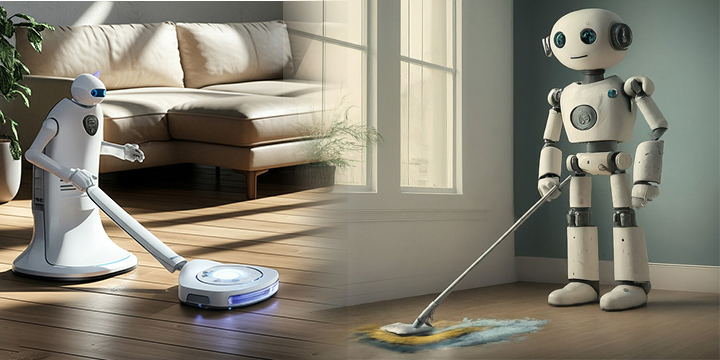
How AI Robots Are Learning to Clean Your Home
Meet the New Robot Maid: Smarter, Adaptable, and Ready for Your Home
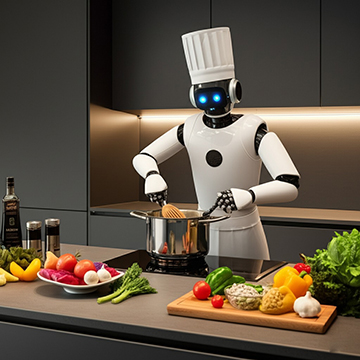
The future of housekeeping is here- and it’s robotic!
Gone are the days when robots could only follow rigid instructions in controlled environments. Today, thanks to major advancements in artificial intelligence (AI), robots are becoming smarter and more capable of handling real-world household chores. From cleaning the living room to organizing laundry, these high-tech assistants are learning to work in homes they’ve never seen before.
Smarter with AI: Robots That Learn and Adapt
Modern household robots are now being designed to perform everyday tasks in unfamiliar spaces. Using AI training, they’re learning to navigate different home layouts, recognize objects, and complete tasks like:
- Cleaning and organizing rooms
- Placing dishes in the sink
- Sorting and storing laundry
These are no longer science fiction fantasies—they’re real developments happening right now.
The Power of Language: Understanding Human Commands
A big boost to robot intelligence comes from Large Language Models (LLMs)—the same kind of AI behind tools like ChatGPT. These models help robots understand spoken or written instructions and act on them accordingly.
Imagine saying, “Put the toys back in the basket,” and your robot actually gets it. That’s where things are headed.
However, there’s a catch. Most robots perform well only in the environments they were trained in. When introduced to new, unfamiliar homes, their efficiency drops significantly. That’s a problem researchers have been trying to solve.
Enter Pi0.5: The Next Generation of Home AI
To tackle this challenge, a robotics company called Physical Intelligence has developed a powerful new AI model named Pi0.5.
What makes Pi0.5 different?
- It allows robots to function in homes they’ve never seen before.
- It’s trained on diverse, real-world data—including information from lab robots, different home setups, and even images from the web.
- It helps robots learn common household tasks in a way that can generalize across environments.
Real-World Testing, Real-World Results
Robots powered by Pi0.5 have been tested in over 100 homes—and the results are promising. They were asked to:
- Place dishes in the sink
- Collect clothes and put them into a basket
- Tidy up general clutter
While not perfect every time, the robots showed continuous improvement. In fact, the performance of Pi0.5-powered robots in these real-world homes matched those trained in specially designed lab environments.
That’s a huge step forward in making robots genuinely useful in our daily lives.
The Last Hurdle: Speed
There is one downside—these robots are still slower than humans. Completing a task takes time, and that might be frustrating for users expecting instant results. However, as technology advances, this issue is likely to be overcome.
Once that happens, we might soon see robot maids becoming a regular part of our homes-efficient, helpful, and always ready to lend a hand (or robotic arm).
Final Thoughts
We’re witnessing the beginning of a new era in home automation. Robots that understand your commands, adapt to your living space, and help with chores are no longer just a dream-they’re on the way to becoming reality.
The Pi0.5 model is proof that AI can empower robots to move beyond the lab and into our daily lives. With continued development, we could soon have robotic helpers that are fast, reliable, and capable of keeping our homes tidy-without us lifting a finger.






2 Comments